July 2, 2026
Summer Trips for 2026
Part of Our Summer Travel Series
By Leonard Chan and Claire Yi
Welcome to the 12th edition of our AAPI related summer travel series. This year’s edition highlights places in Southern California. All of these places were visited after Claire Yi and I attended the Asian Pacific Americans in Higher Education (APAHE) Conference in Anaheim this year.
If you are not planning on going to this region, check out some of our previous articles. Here are links to these articles – 2005, 2006, 2007, 2008, 2009, 2010, 2021, 2022, 2023, 2024, and 2025 (note: some of the links from these articles are broken, but you can still find most of these places by doing an online search).
Here are the highlighted places for our 2026 edition.
------------------
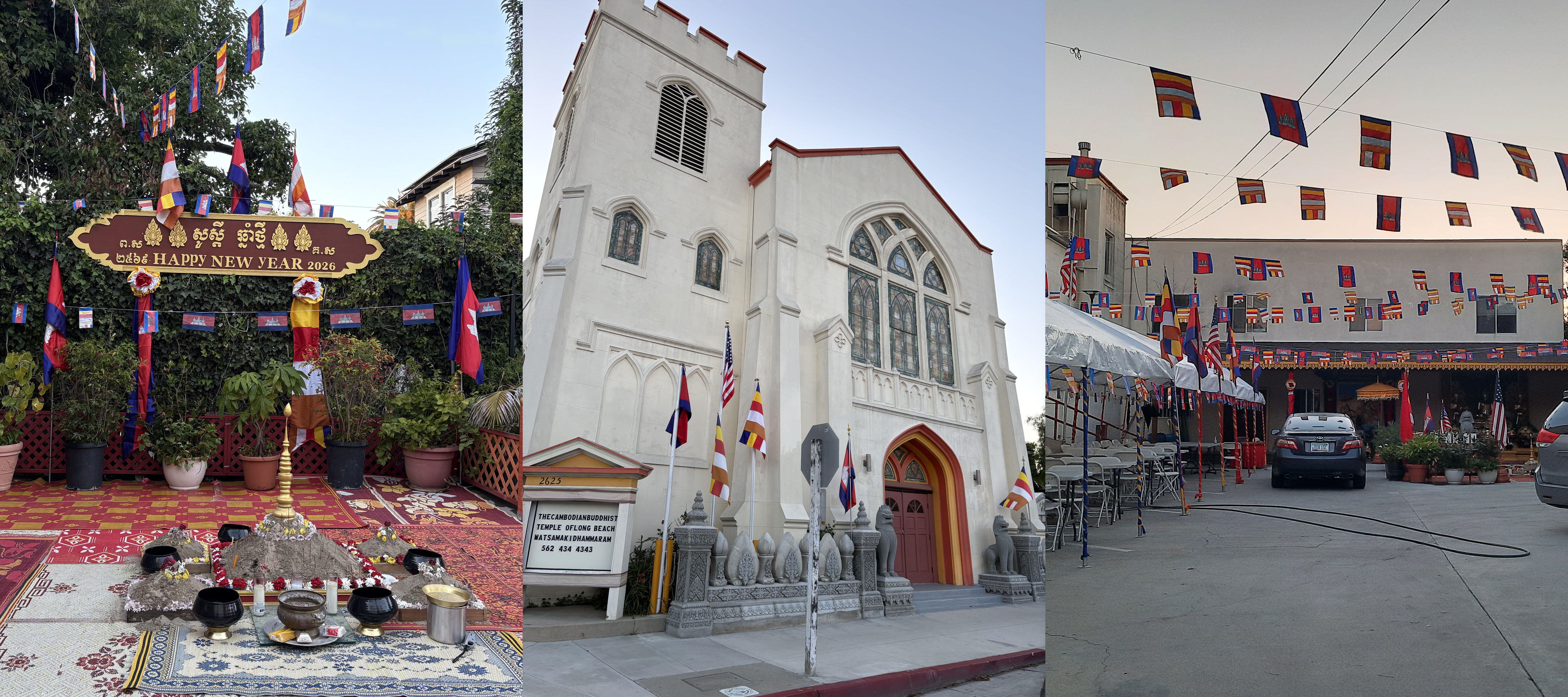
Cambodian Buddhist Temple of Long Beach (Wat Samakidhammaram)
2625 E 3rd St, Long Beach, CA 90814 (Google Map)
Claire: This past April, I had the opportunity to drive down with Leonard to attend the Asian Pacific Americans in Higher Education Conference (APAHE). I was aware that this was at the same time as Southeast Asia’s solar New Year, popularly known as the water festival. It is celebrated in Laos, Thailand, Myanmar, Cambodia, and various regions in southern China. Since we were in Southern California, I figured that it would be apt to visit one of the Buddhist temples during the holiday.
During the conference, I actually asked an attendee (after overhearing him say “Happy New Year!” to someone) if he knew of any temples that were celebrating nearby. He recommended the Cambodian Buddhist Temple in Long Beach, Wat Samakidhammaram, citing that the monks were “very kind” and the food was “very good.” We raced over to check it out (thank you Leonard for your patience!).
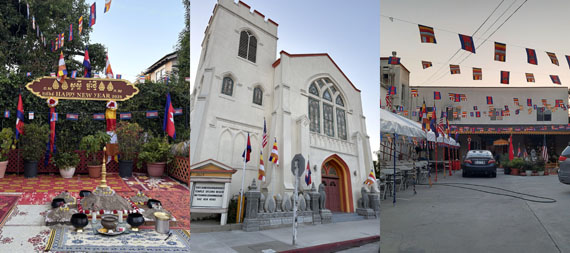
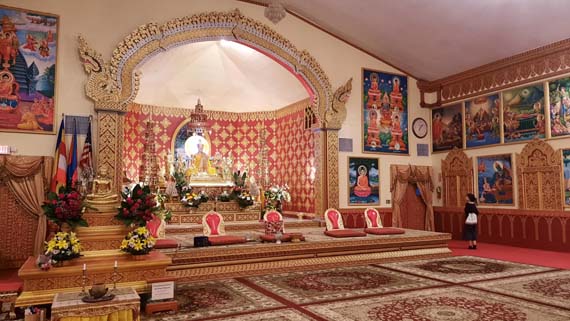
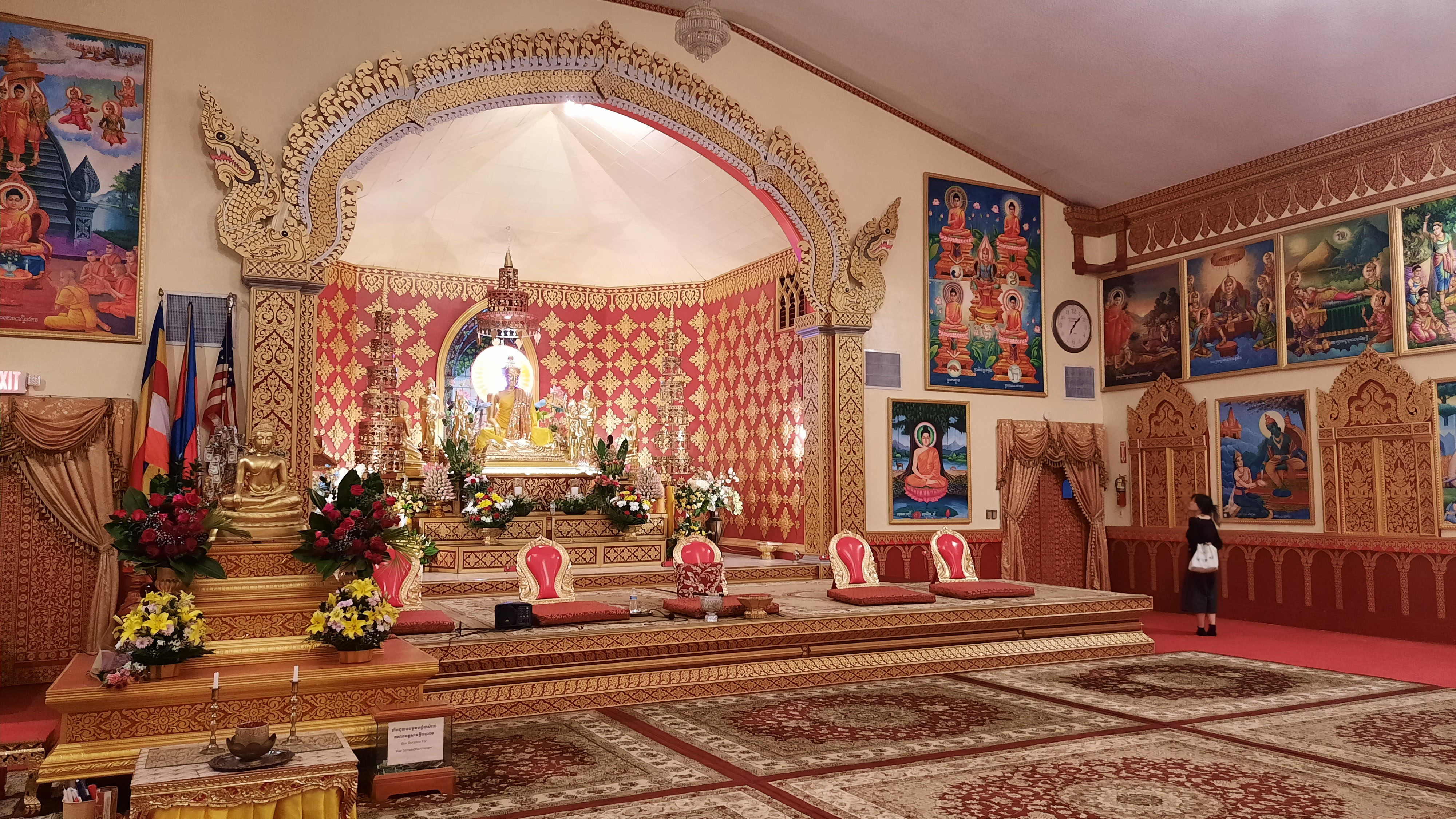
We either missed the celebrations, or we were extra early for them! A monk was watering plants but offered to let us inside. As someone who studied history, world religions, and geography, it was very interesting to get to see the different iconography of the Buddha, his Noble Eightfold Path, and his teaching to people around him. While we didn’t get to participate in the festivities, visiting this temple gave me the peaceful space and time to reflect.
Highlighting this place in context with the Cambodia Town of Long Beach, it is an area of restaurants, art, and community. Cambodians make up 4% of Long Beach’s population, 19,000-20,000 people, the largest concentration of the Cambodian diaspora. Following the Khmer genocide and U.S. bombing campaigns, a mass migration of Cambodians ensued, with estimates of 144,000 coming to the United States.
This is a fantastic article by James Tir, a food content creator (@lbfoodcoma on Instagram) and Long Beach native: “On the Resilience of Long Beach’s Cambodian American Community.”
“Outside of Long Beach, you’d be hard pressed to find authentic Cambodian food like we have here — it’s hard to experience anywhere else. And for our community to survive through everything — the racism, the riots, the pandemic, the genocide — to open up businesses and raise our families and make it through all of these challenges, it’s impressive. My community has taught me to be proud of who you are, to barrel forward and follow through with what you want to do.”
Additional Resources
The Visit Long Beach web page for Cambodia Town
Informative web page by the Historical Society of Long Beach – Cambodian Community History
UC Davis Cambodian American Studies Curriculum
CSULB's roots in Long Beach Cambodian Community
Wikipedia Article on the Cambodian New Year
------------------
The Korean Bell of Friendship (aka: Korean Friendship Bell)
Angels Gate Park in San Pedro (Google Map)
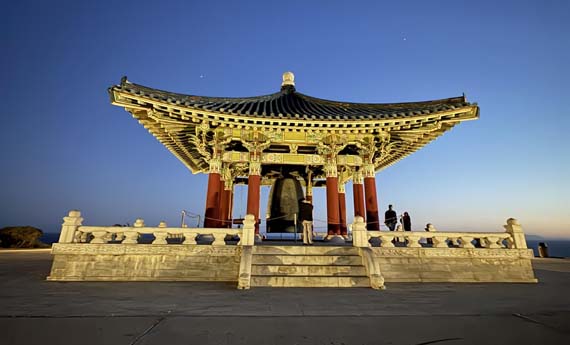
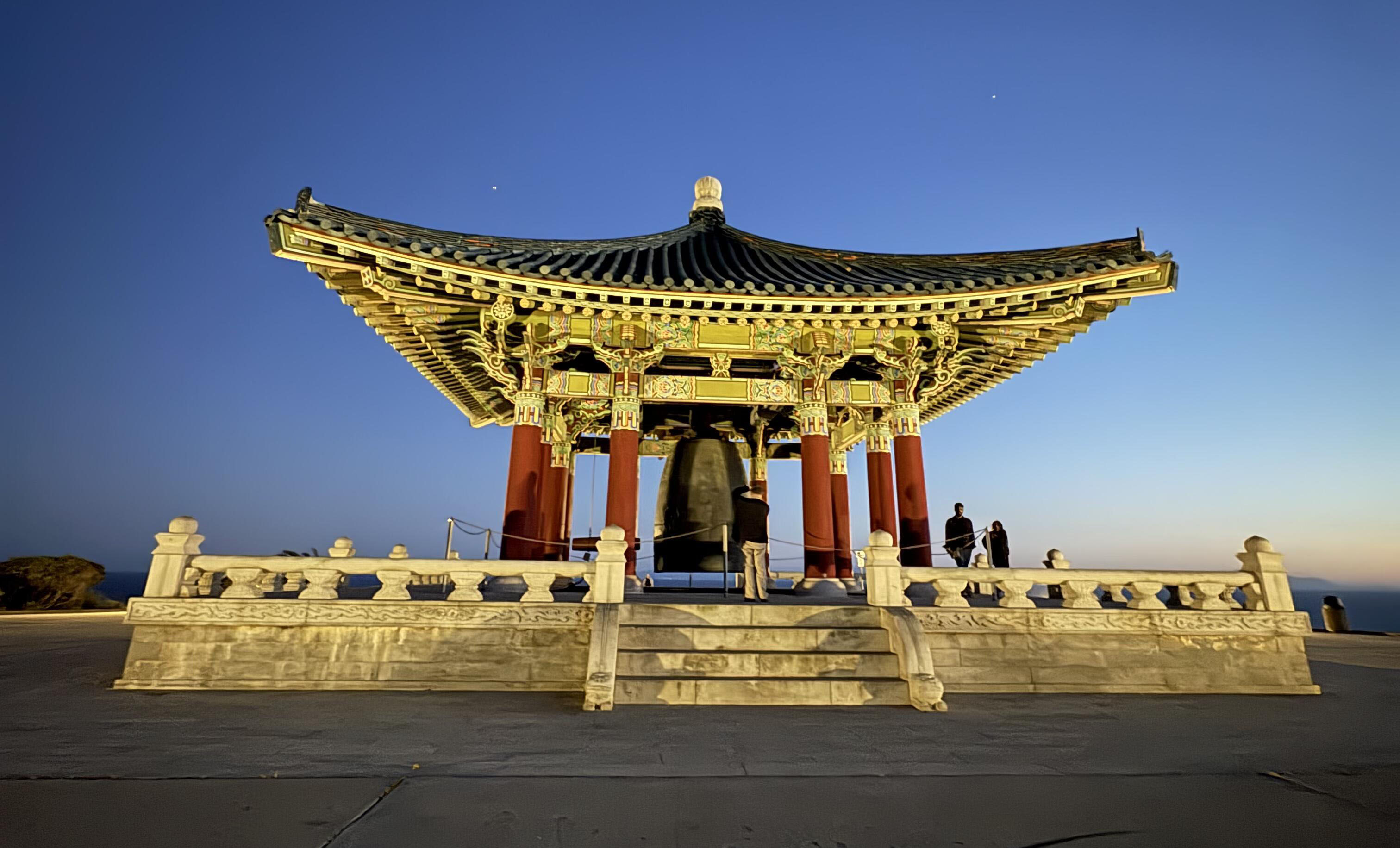
Leonard: By the time we had reached the site of this bell in San Pedro (a neighborhood of Los Angeles), the sun had already set, but the sky was still aglow from a beautiful sunset.
I first learned of this site in 2010, when I worked on the book “Public Japanese Gardens in the USA: Present and Past: Southern California” for author David Newcomer. David had included it in his book as a point of interest near the Earl Burns Miller Japanese Garden at California State University Long Beach.
Over the years, I had forgotten how I first learned about this site and only knew that I had considered it for earlier editions of this travel series. During my past deliberations on deciding on which places to include for our articles, I did not fully understand the significance of this bell to AAPI history.
According to most accounts, Korean American actor Philip Ahn helped coordinate the effort to bring the bell to the United States and have it located in Los Angeles. Although most people know Philip Ahn from his role in the TV series “Kung Fu,” his father, Ahn Chang Ho (Dosan), was a leading member of the early Korean American community in America. Dosan was also a political activist that advocated for the liberation of Korea from Japan during the early 20th Century.
In my search for significant Korean American historical sites, a number of these locations were located in California and had some connection with Dosan. It seems quite fitting that Philip Ahn and the Korean American community of Southern California played a role in this gift of friendship to America.
This year marks the 50th anniversary of South Korea’s gifting of the bell to the United States (completed and dedicated on Oct. 3, 1976). The bell was given in celebration of America’s bicentennial and to honor veterans of the Korean War.
The bell is rung on special occasions including the 4th of July. It is struck 13 times, once for each of the original 13 states. So if you are in the area, be sure to check out the festivities this year for America’s 250th anniversary.
Claire: The pavilion itself is beautiful, and I am thankful that we went at night to see its colors in the spotlights. As we walked around, I was reminded of the ongoing fight for Korean reunification. The United States and the Soviet Union separated Korea after its period as a Japanese colony, splitting it at the 38th parallel. The U.S. participated in the bombing of North Korea, with estimates of 282,000 North Korean casualties from bombing raids. By the end of the war, it is estimated 1.5-3 million Korean civilians were killed. With the presence of the U.S. military still on South Korean soil, I can only hope for a better future and for families and lineages to be reunited.
Additional Resources
Wikipedia article on the Korean Friendship Bell
Youtube video on the bell
------------------
Filipinotown, Los Angeles - Filipino American WWII Veterans Memorial
Lake Street Community Center (227 N Lake St, Los Angeles, CA 90026 Google Map)
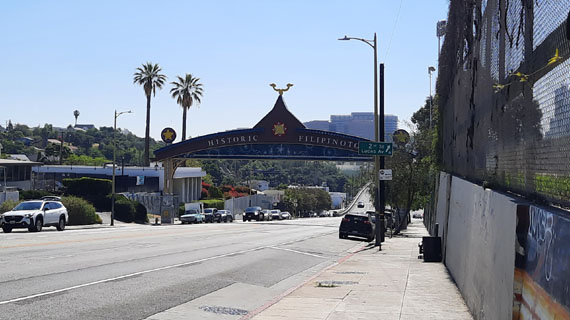
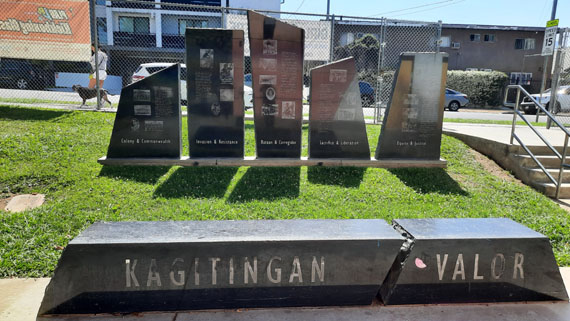
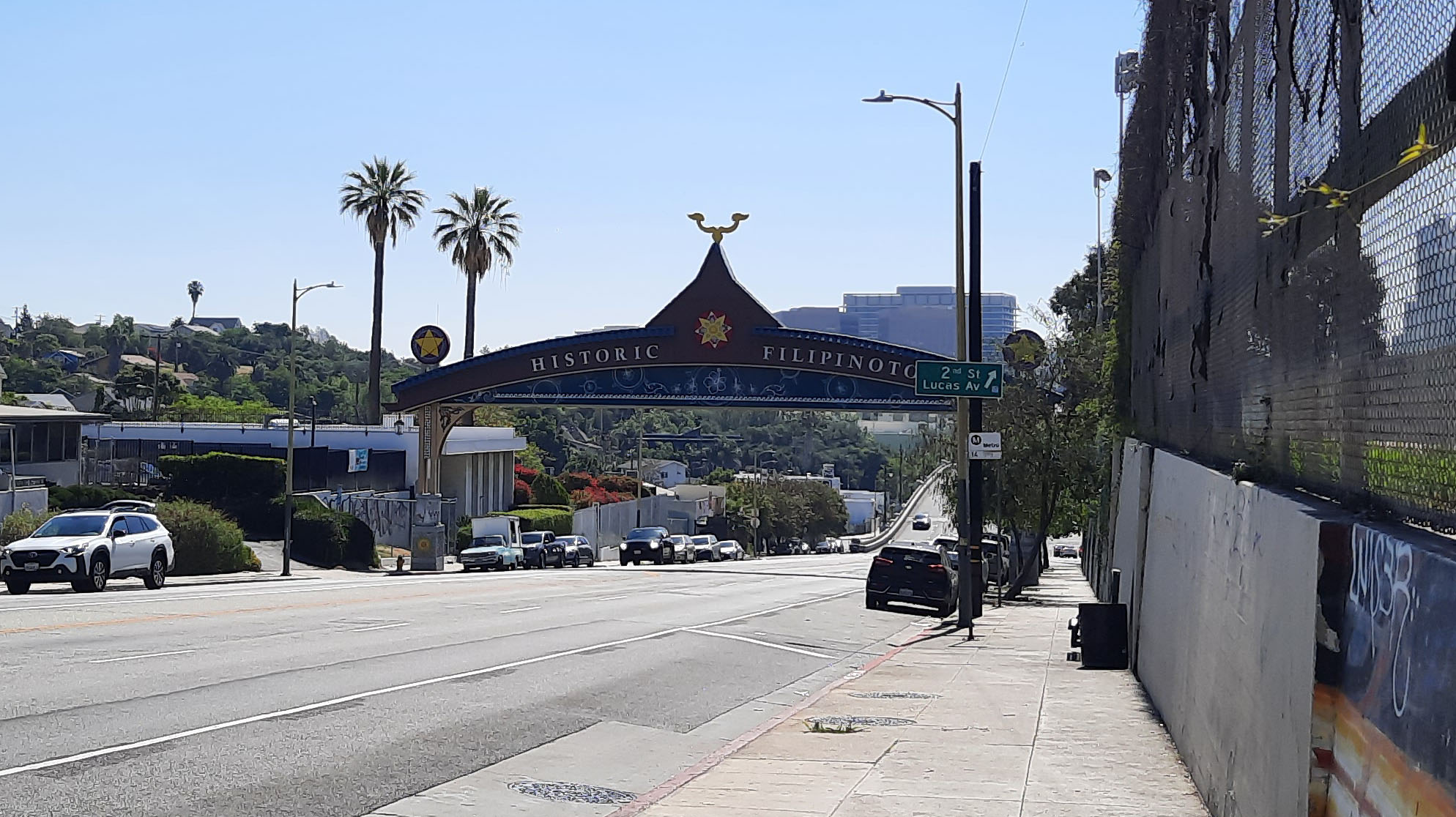
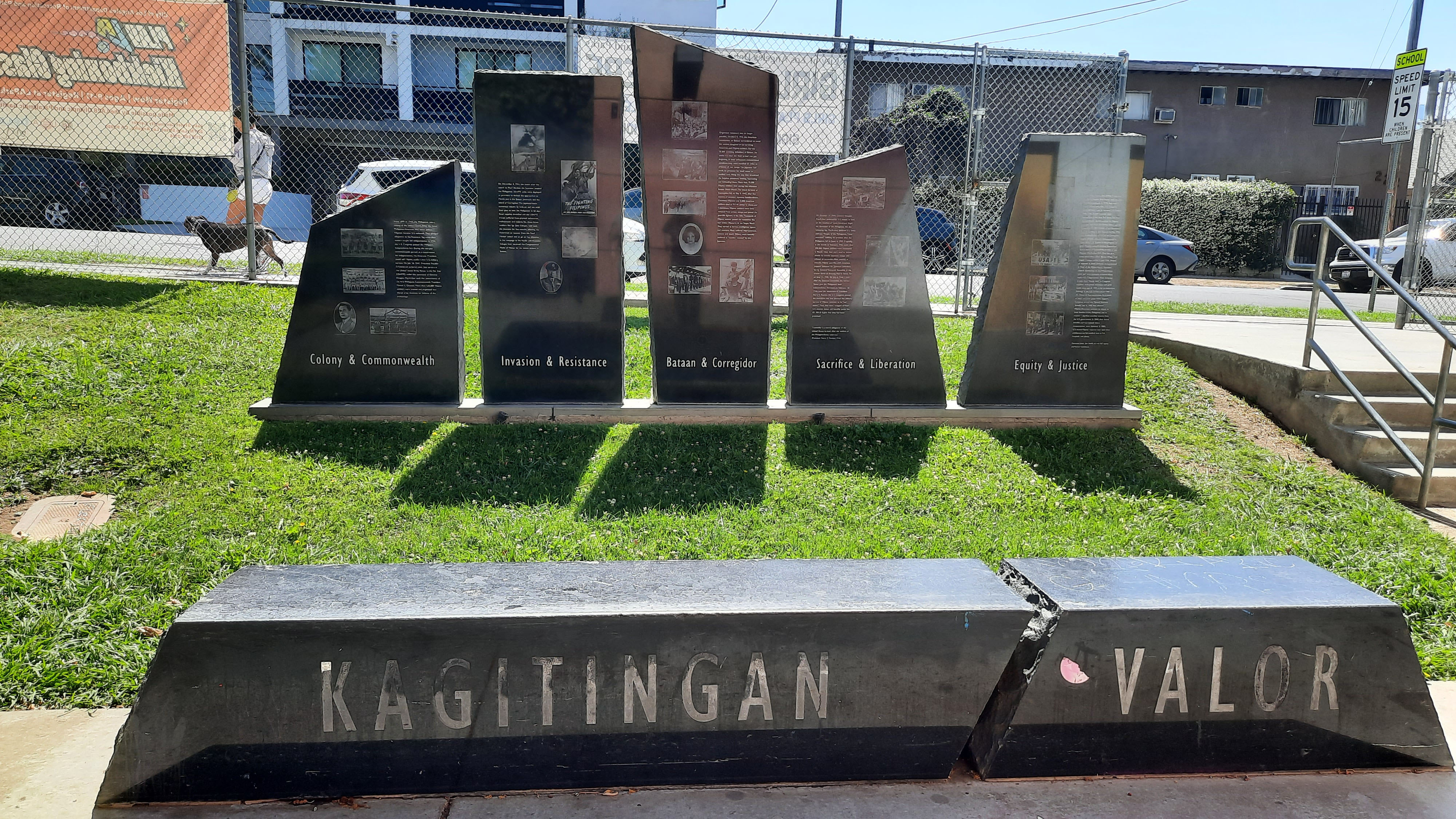
Leonard: On the next day, on our way back to the Bay Area from Anaheim, we made stops in downtown Los Angeles. Our first stop was to see the Historic Filipinotown Arch and then the Filipino American WWII Veterans Memorial (Valor Monument – Kagitingan).Since we were unaware of how the monument looked like exactly, we nearly drove by it as we went down Lake Street (an average urban looking neighborhood). Upon pulling into the Lake Street Community Center parking lot, we asked someone for the location of the monument. It was located in the front of the center (on the inside of the fence separating the street from the building).
From the inside of the fence (facing the street), you could read Filipino American history on five engraved granite slabs. Going from left to right, the slabs were labeled “Colony & Commonwealth,” “Invasion & Resistance,” “Bataan & Corregidor,” “Sacrifice & Liberation,” and “Equity & Justice.” On the other side of the slabs, each one contains the letters that spelled “Valor.” Above the “l” on the middle slab were the words “Bataan was not our last battlefield. We are still fighting for equity.”
The memorial was dedicated nearly twenty years ago on November 11, 2006 (Veterans Day).
After coming to this monument, I had a nice feeling that this was worth the effort to find it. The monument contained a lot of historical information and I appreciated that they placed the monument by a neighborhood community center where people would pass by it on their everyday walks.
Claire: The five stones detail the history of the U.S.-Philippines relations; originally a colony under the U.S., the Philippines sought to gain freedom from the U.S.. When the Philippine Independence Act was passed, Philippine citizens were required to serve in the U.S. military to obtain independence. 120,000 Filipino soldiers were conscripted, trained, and defended the islands.
Despite fighting together against the Japanese on the Philippine’s land, Filipino veterans were stripped of their status, a sign of betrayal by the U.S. in 1946. It took 44 years for these veterans to earn their right to citizenship, followed by an additional 7 years of organized protests. They fought to be able to return to the Philippines and to receive a monthly income as veterans. Although I knew about the colony and commonwealth periods of the Philippines, I had never heard of these demonstrations or the disavowment carried out by the U.S. This is a piece of forgotten history that is extremely relevant to today’s conversations surrounding citizenship in our country.
Additional Information
Duke University Migration Memorials Project
------------------
Chinese American Museum, Los Angeles (and the plaque for the Los Angeles Chinese Massacre)
Pueblo de Los Ángeles (425 N Los Angeles St, Los Angeles, CA 90012 Google Map)
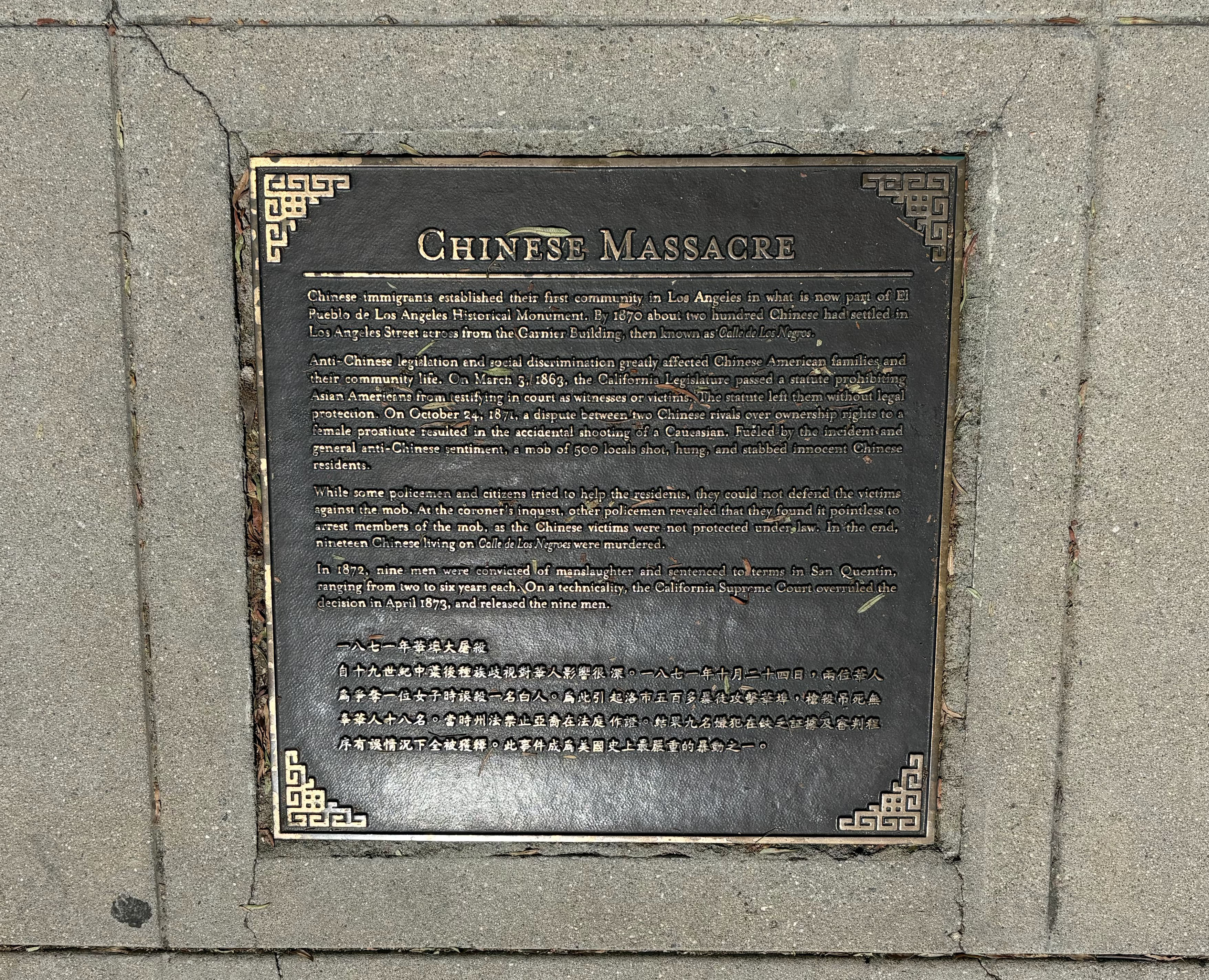
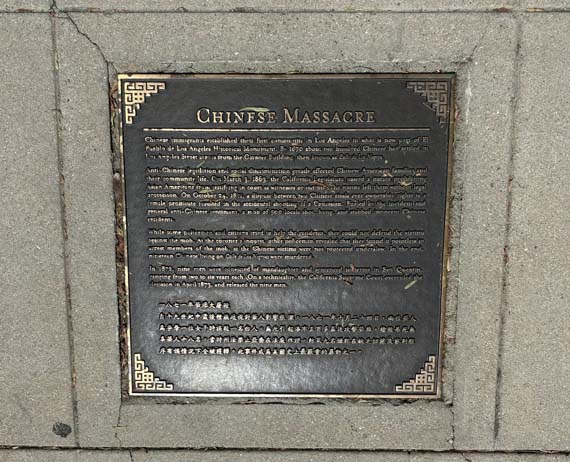
Leonard: For our next stop we went in search for the plaque memorializing the 1871 Los Angeles Chinese Massacre (an incident in which a mob attacked and murdered the ethnic Chinese in Los Angeles – Wikipedia article). From what we read online, it was said to be on the sidewalk outside the Chinese American Museum of Los Angeles.
Claire and I decided to check out the museum and ask someone there for the directions on finding the plaque. On that day, the worker at the museum was unaware of the plaque and its location, but directed us to a display on the terrible incident.
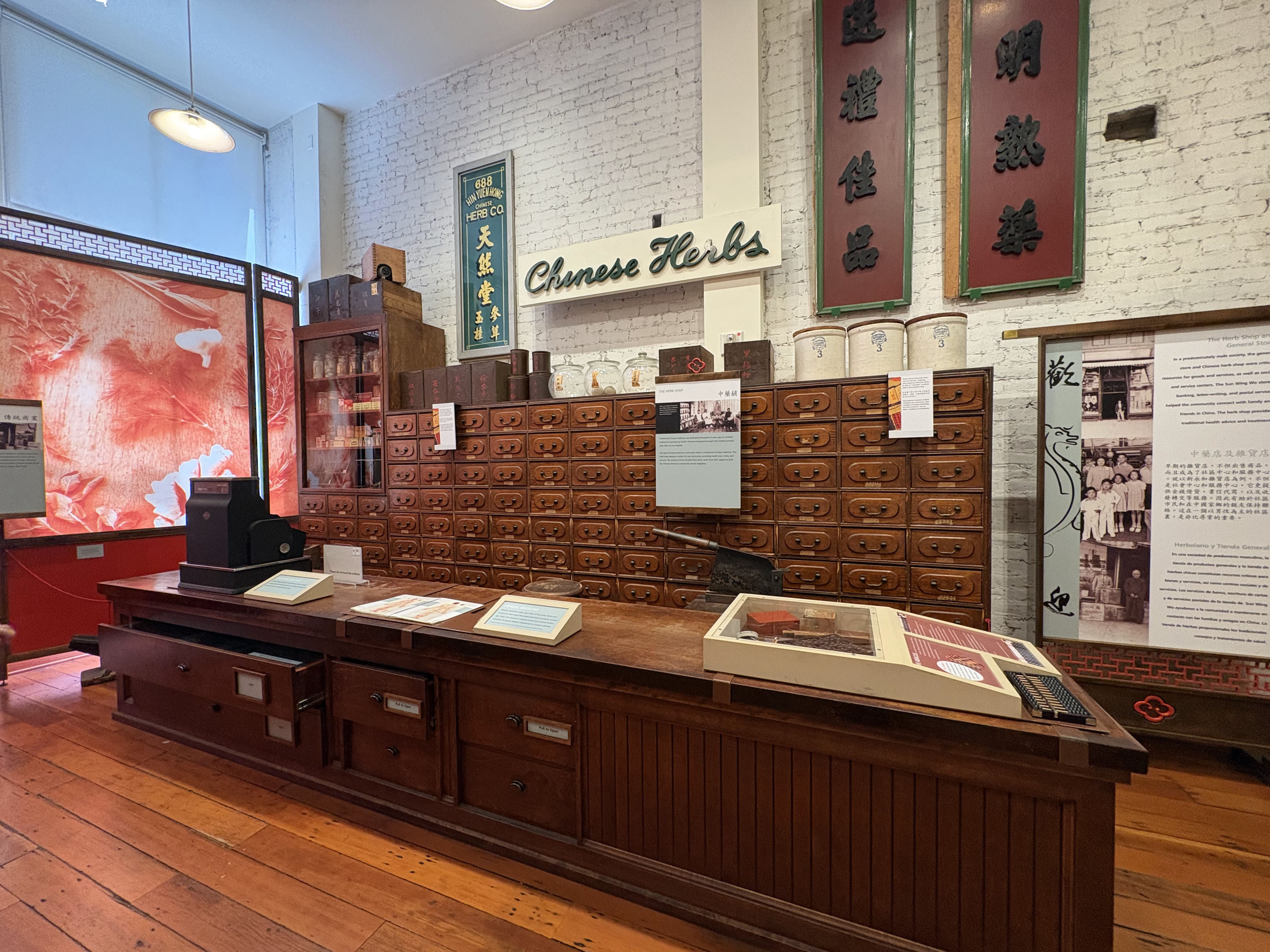
There were lots of interesting materials in this small museum, including the interior of a Chinese herbal shop. This part of the museum reminded me of what my uncle had created for the Chinese Temple Museum in my family’s hometown of Oroville. My uncle had removed most of the contents of my grandparent’s herbal shop and store and placed it in a new wing of the Oroville temple museum. I wonder if my uncle had seen this museum in Los Angeles and gotten the idea from them?
Once again, time did not permit us to stay longer to check out the museum’s 7,200 square foot layout (we did not even get to go to the second floor).
When we left the museum, we continued our search for the plaque and eventually found it on the North Los Angeles Street sidewalk adjacent to the museum. It was rather small and easy to miss. It is no wonder that the Chinese community in Los Angeles is working to create a new monument to properly memorialize the eighteen Chinese residents that died in this terrible massacre. You can read more about the memorial project at the 1871 Memorial Project’s website.
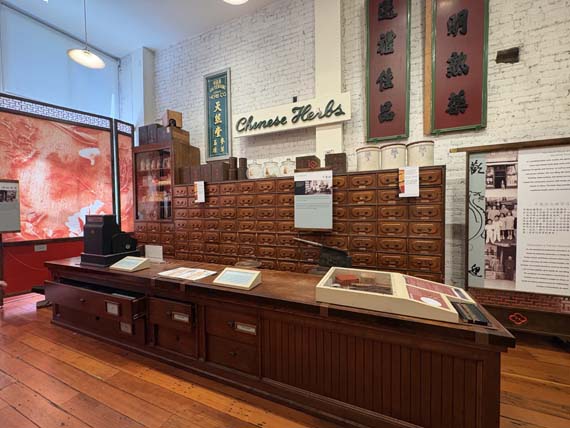
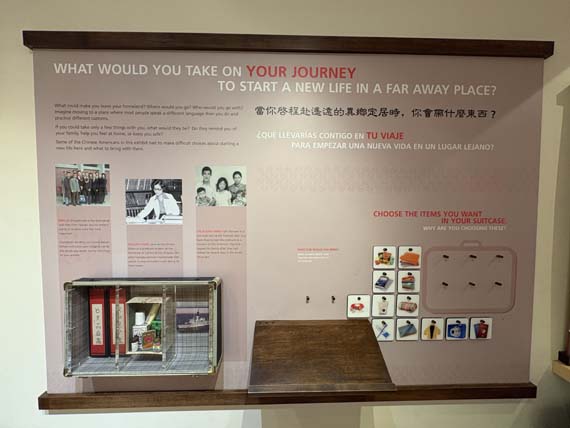
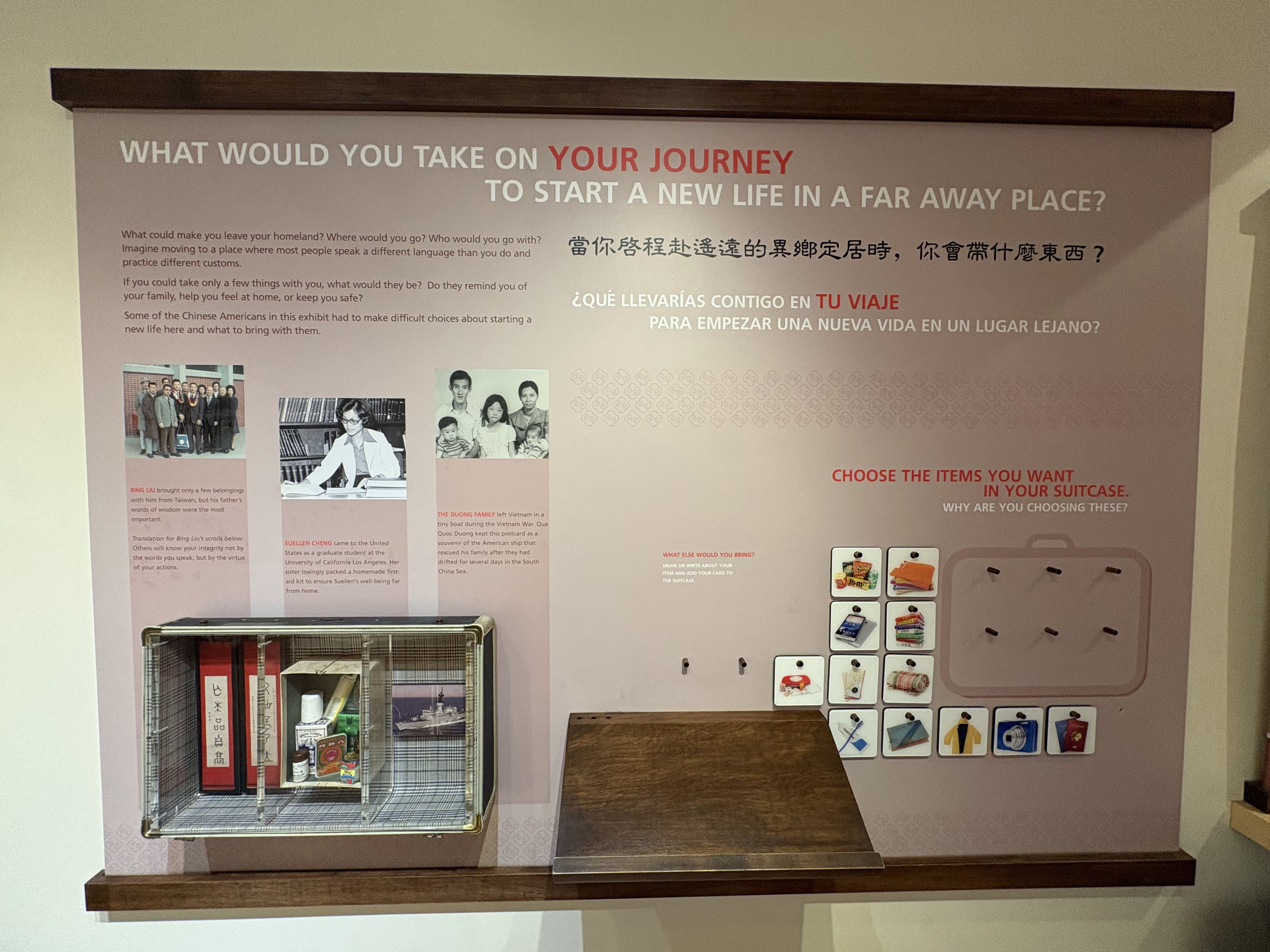
Claire: As a southerner, I will echo the sentiments of AACP’s Harrison Zhuang: prior to moving to California, I had only encountered first-generation Asian American families, newly immigrated. It is truly fascinating to see physical evidence of Chinese Americans from the 19th and 20th centuries. The museum poses questions that families today face: What could make you leave your homeland? Who would you go with? What would you bring with you?
I really loved this introduction to the museum; it is interactive for kids, but also allows for more critical thinking in adults. The stories included throughout the exhibit are powerful reminders that America’s strengths lie in its diversity and desire for freedom.
I highly recommend checking out this museum. It is a very thorough walkthrough of Chinese American history: success, violence, and perseverance in the U.S.. The Chinese Historical Society of Southern California has done a fantastic job curating herbal shop drawers, old Chinatown remnants, and early immigrants’ papers. At their grand opening, they had 4,500 artifacts and thousands of photos donated by descendants of the original families that immigrated here. From Sonia Mak, one of their original assistant curators: “When people walk into the Museum, we want them to feel as though they are also taking a trip back in time.”
Additional Resources
The city of Los Angeles’ web page for the memorial
Chinese American Museum of Los Angeles website
------------------
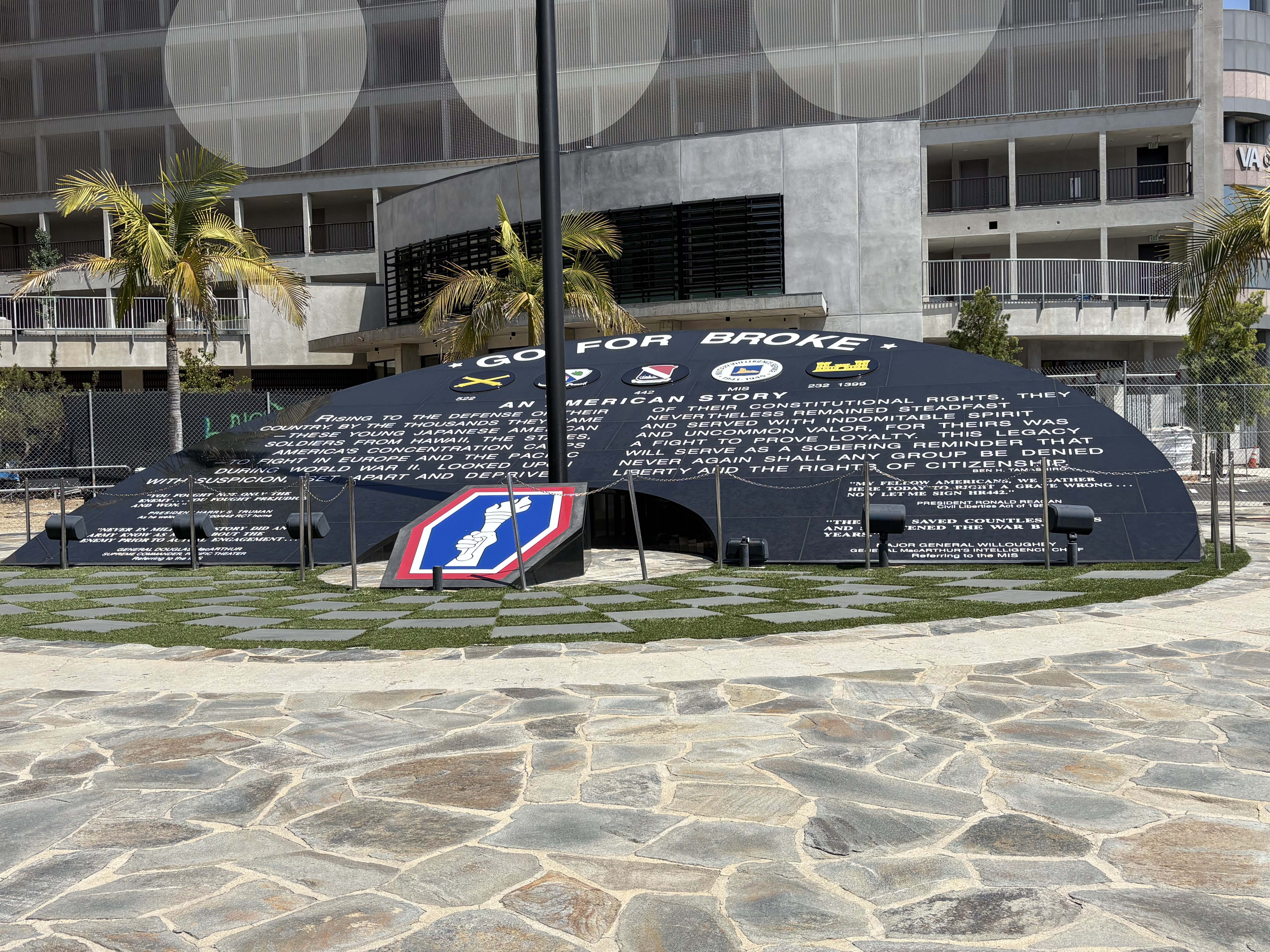
Go For Broke Monument in Little Tokyo Los Angeles
160 N Central Ave, Los Angeles, CA 90012 (Google Map)
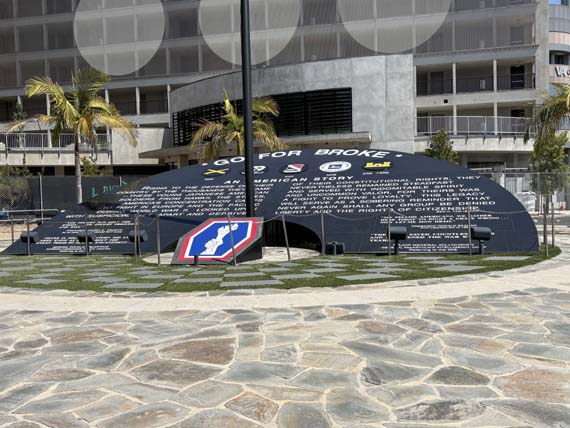
Leonard: The Go For Broke Monument in Little Tokyo, Los Angeles, is a monument for the Americans of Japanese ancestry that fought for the United States during World War II. “Go For Broke” was the motto of the highly decorated 442nd Regimental Combat Team that fought in Europe.
I first learned about this monument when AACP’s Mas Hongo went to see it. The name of Mas’ brother Manabu is on the monument. So one time when Mas was in Los Angeles, he tried to find it. He told us the story of how he had wandered around Little Tokyo looking for the monument and bumped into J.K. Yamamoto. J.K. is a reporter and editor for the newspaper Rufu Shimpo. We used to see J.K. pretty frequently when he worked in the Bay Area. Since J.K. knew Mas, he gladly helped him find the monument which was located behind the Japanese American National Museum.
When Claire and I found the monument, we were a little disappointed to find that there was a fence placed around it. At the time, we did not know that there was a major construction project happening behind the monument. So the monument is fenced off during weekdays. I thought that it was kind of ironic that the fence reminded me of how the people whose names were on the monument may have had family and friends left behind in fenced off internment camps.
If you wish to see this monument, it is best to go on weekends when they open up the fence.
If you go in the fall, be sure to also visit the Japanese American National Museum, which is due to reopen after their remodeling project is done.
Additional Information
Go For Broke National Educational Center
--------------
----
After visiting the Go For Broke Monument, Claire and I got some food in Little Tokyo and headed home.
Feel free to tell us about your visits to these sites and any other AAPI significant places. Have a great time!
Copyright © 2026 by AACP, Inc.